
Tree roots and plumbing really don’t mix – at all. And here in beautiful Queensland, where everything seems to grow fast and wide, some species are far more likely than others to cause serious underground damage. If you’ve been searching for the worst trees for sewer lines, it’s probably because you’ve had repeated blockages or slow drains – or been warned that roots may have already found their way into your pipes. The reality is that certain trees are simply far more aggressive around water and nutrients – like your precious plumbing pipes! And knowing which ones to avoid can save you a lot of stress (and money) later. In South East Queensland, tree root blockages are incredibly common. Urban Utilities recently reported thousands of wastewater blockages caused by roots in a single year. The perfect storm here is:
- Warm weather
- Thirsty trees
- Ageing pipework.
Put them all together, and once those roots creep into a tiny crack in a pipe, they simply won’t creep back out in politeness – they’ll grow, they’ll thicken, and they’ll unkindly trap debris until your plumbing flow stops completely. Let’s zoom in on the 5 species we most regularly see causing trouble across Brisbane and the Sunshine Coast – and what you can realistically do about them.
1. Camphor Laurel
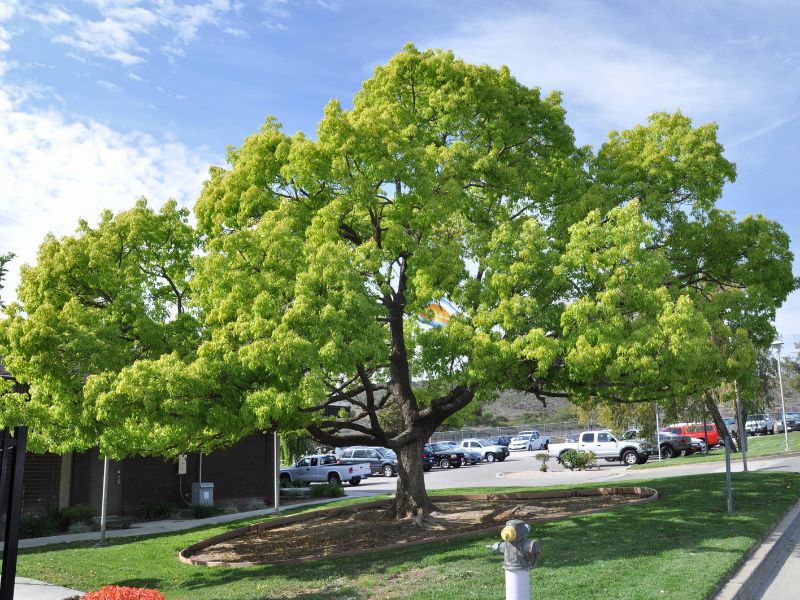
Camphor Laurel trees are large, fast-growing, and extremely thirsty. Their root systems are aggressive and wide-spreading, often travelling well beyond the canopy.
If there’s a tiny crack or loose joint in your sewer or stormwater line, roots will surely find it. And once inside, they expand quickly and create a dense mass that blocks flow.
In many parts of Queensland, Camphor Laurel is considered an environmental weed. Brisbane City Council actively manages invasive species, and the Queensland DPI provides guidance around weed control laws.
WHAT TO DO:
If you already have one near your sewer line, don’t ignore early warning signs like slow drains or gurgling toilets. Root cutting and CCTV drain camera inspection may be needed. If planting new trees, try to avoid this species entirely.
2. Fig trees (Ficus)
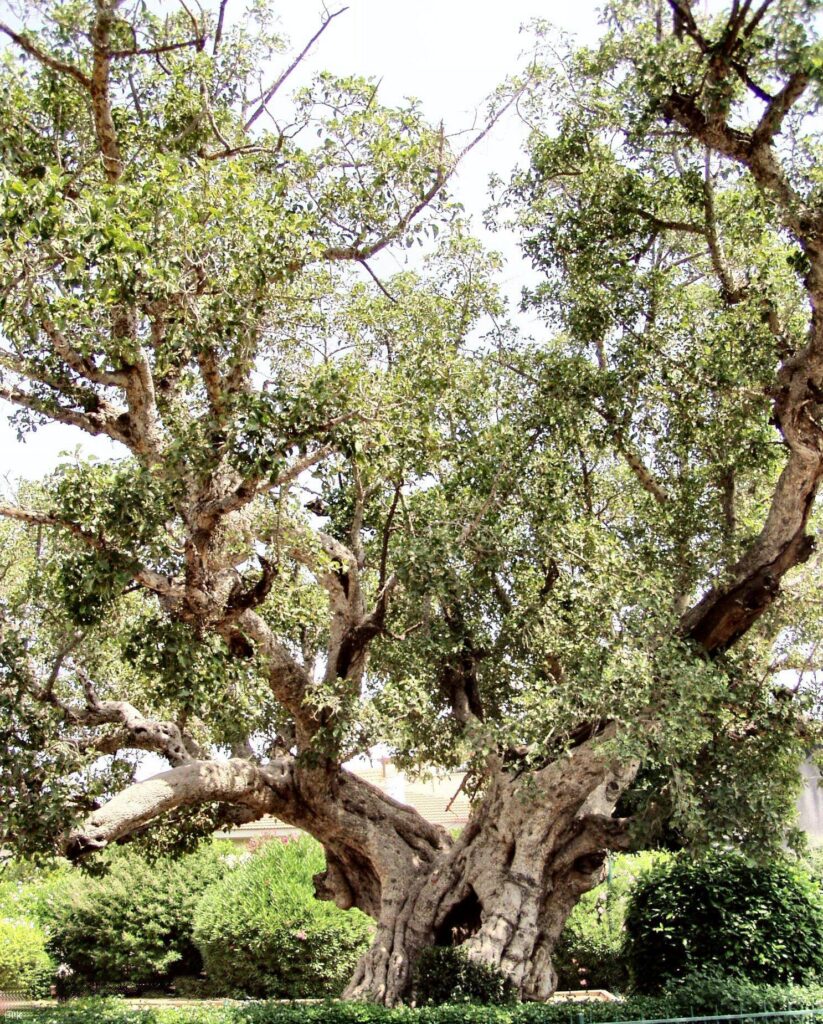
When people ask us about the worst trees for sewer lines, figs almost always top the list.
Ficus species are well known for their powerful, invasive root systems. Urban Utilities specifically warns against planting figs near wastewater pipes because roots actively seek out water and nutrients. They can travel two to three times the radius of the canopy.
We’ve seen even otherwise healthy pipes become pressured and displaced over time.
WHAT TO DO:
Never plant a fig near underground services. Before planting, you can request a free underground services plan through Before You Dig Australia or check drainage plans with your local council to see exactly where pipes run on your property. If one already exists close to your home, consider a plumbing inspection to assess risk. Removing a mature fig can be complex and may require council approval.
3. Jacaranda

Jacarandas are beautiful, and when they’re in bloom, they’re iconic. But beneath the surface, their roots are opportunistic and persistent.
They’re not quite as aggressive as figs, but they’re still capable of causing serious blockages – especially in older clay or concrete pipes.
We often see Jacaranda roots entering at pipe joins and growing inside the line, acting like a net that catches wipes, tissues and debris.
WHAT TO DO:
If you’re keeping a Jacaranda, ensure your stormwater and sewer pipes are in good condition. Preventative inspections can save you thousands.
4. Eucalyptus (Gum trees)
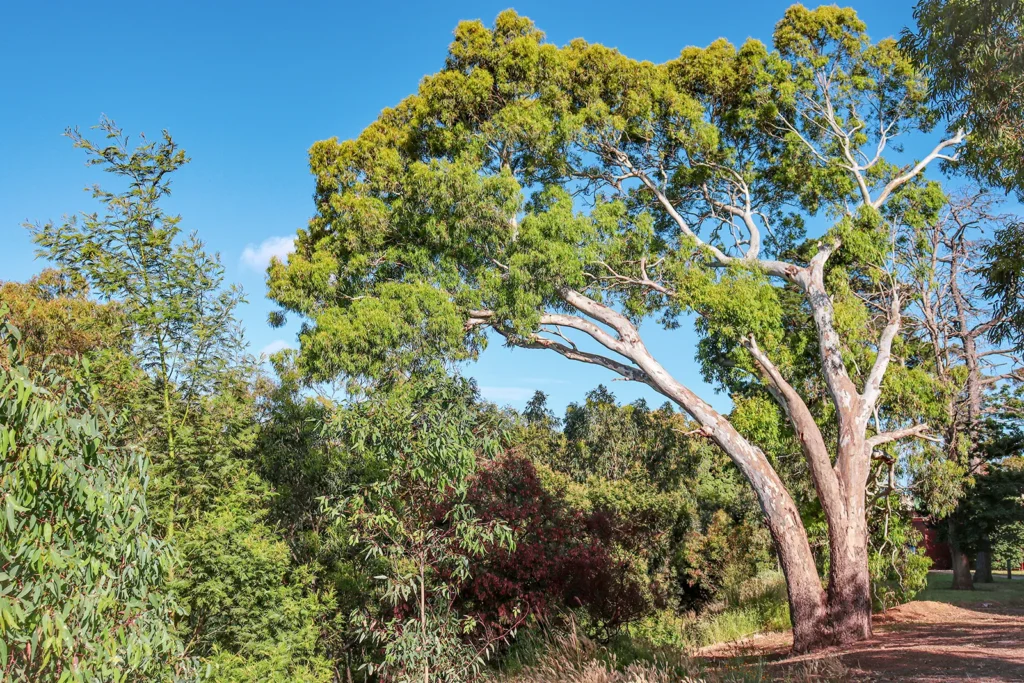
Eucalyptus trees are a Queensland staple. But many gum varieties have extensive root systems that travel far in search of moisture.
Large gums near properties so often contribute to stormwater and sewer line blockage and damage – particularly where older pipework is present.
Their size alone makes them risky close to buildings.
WHAT TO DO:
If you’re planting, ensure there’s a significant distance from all underground services. As we’ve said, if you’re unsure where your pipes run, request a drainage plan from council or lodge a query through Before You Dig Australia before planting.
5. Cocos Palms
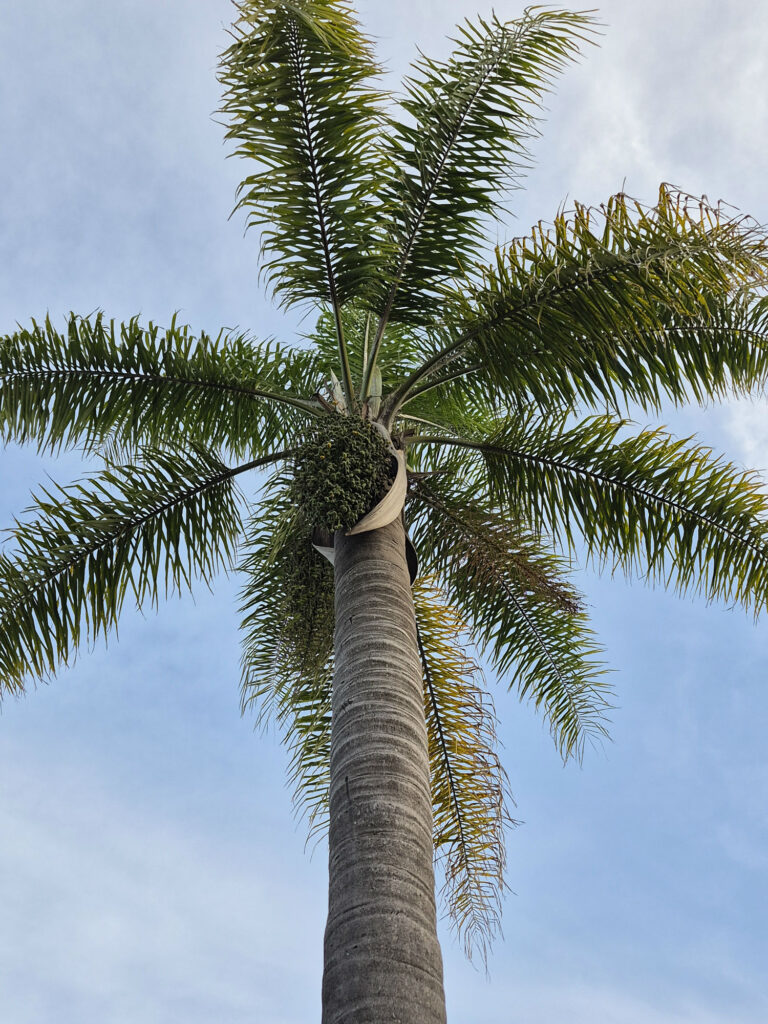
Cocos Palms are common in coastal areas across the Sunshine Coast and Brisbane. While their root systems aren’t as wide as figs, they can still infiltrate damaged or ageing pipes.
Because they’re often planted close to homes and boundaries, it’s that proximity that becomes the issue rather than root aggression alone.
WHAT TO DO:
Avoid planting directly above or adjacent to known pipe routes. If removing palms, check whether the species is considered invasive in your local council area.
Why roots target pipes
Tree roots don’t really ‘attack’ pipes – they’re just following the moisture and the nutrients, and your pipes (and the wastewater) are happy to oblige!
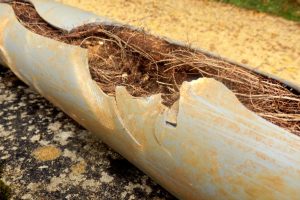
Tiny feeder roots easily slip through the smallest of cracks. And once inside, they start to grow and swell and form a dense mass. We plumbers often refer to it as a drain tree – when a tree’s root system has effectively established itself inside your pipe. From there, the debris builds up and your blockage nightmare begins.
Warning signs you may already have a problem
If roots have already made their way into your pipes, your plumbing will usually start giving you subtle – and sometimes not-so-subtle – warning signs. Keep a close eye (ear and nose) out for:
- Repeated blocked drains
- Gurgling toilets
- Slow sinks across multiple fixtures
- Sewage smells outdoors
- Soggy patches in the yard.
Noticing these already? Don’t wait a second longer, because root damage is not going to fix itself.
What to do if roots are already in your pipes
If roots have taken hold inside your pipes, acting quickly is the best way to prevent further damage and avoid a much more expensive repair down the track.
You can:
Book a CCTV drain inspection: This confirms whether roots are present and shows how severe the intrusion is.
Mechanical root cutting: High-pressure jetting or root cutting equipment clears the obstruction.
Assess pipe condition: If cracks remain, roots will return. Pipe relining is often recommended to permanently seal entry points without excavation.
Consider long-term planting decisions: If the offending tree remains, the issue can recur.
Planting smarter: The best trees for sewer lines
We’ve covered the worst, now let’s look on the bright side! Because if you’re landscaping or rebuilding, choosing the best trees for sewer lines is one of the smartest things you can do.
- Urban Utilities recommends avoiding species that aggressively seek water, like figs and paperbarks, and opting for less invasive varieties. Smaller shrubs are generally safer on compact blocks.
- Brisbane City Council also encourages residents to select native or non-invasive plants and to check vegetation regulations before removal or planting.
- And when in doubt, speak with your local nursery – and always confirm pipe locations before digging.
Roots already affecting your pipes?
So don’t forget – Queensland’s climate encourages strong growth above and below ground. And the wrong tree in the wrong place can cost you thousands in plumbing repairs.
If you suspect roots are already affecting your pipes, or you’d like a preventative inspection for peace of mind, Static Plumbing can definitely help. Our friendly, licensed team across Brisbane and the Sunshine Coast uses CCTV drain inspection cameras and high-pressure water jetting equipment to identify and clear root blockages properly – not just temporarily.
Contact the plumbers at Static Plumbing today to protect your pipes before a small tree root becomes a major headache.