
It’s one of those questions that seems like it should have a simple answer – until you start looking into it: What size hot water system do I need?
It’s something us plumbers get asked constantly – so what’s the answer? The only honest one we can give you is that it depends on more factors than most people expect.
Get the size just right and you’ll have:
- Reliable hot water
- Reasonable running costs
- A system that lasts.
Get the size wrong and you’ll either be:
- Standing under a cold shower at 7 am
- Or paying to heat water you never use.
So in our exclusive guide, we’re going to walk you through the 8 factors that actually determine what you need – so by the end of it, you should have a clear picture before you speak to anyone.
Let’s dive in:
1. How many people live in your home?
This is the starting point for every sizing conversation.
As a general guide:
- Storage tank systems are typically sized at around 50 litres per person per day for electric systems and slightly less for gas.
- A two-person household can generally manage on a 125-160 litre tank.
- A family of four is usually looking at 250-315 litres.
- Five or more people and you’re in 315-400 litre territory, or you’re considering a continuous flow system instead.
Remember, these are starting figures, not final answers – the factors below will shift them considerably.
2. What are your usage patterns?
Two households with the same number of people can have very different hot water demands depending on how they use it.
A family where everyone showers in a 90-minute window before school is a much harder ask on a storage system than a household where usage is spread across the day.
These all push the requirement up:
- Long showers
- Regular baths
- Dishwashers
- Simultaneous demand.
If your household has a predictable morning rush, factor that into the sizing conversation. A tank that looks adequate on paper can struggle if it’s being drawn down faster than it can recover.
3. Tank or continuous flow?
Before you land on a size, you need to land on a type – because the sizing logic is completely different:
- Storage systems hold a set volume of pre-heated water.
- Continuous flow systems heat water on demand and have no tank at all.
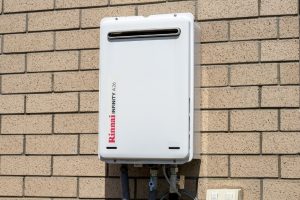
If you’re asking what size instant hot water system do I need, the answer isn’t measured in litres – it’s measured in flow rate, expressed in litres per minute:
- A 16L/min unit suits most households with one or two simultaneous outlets.
- A 26L/min or 32L/min unit is more appropriate for larger homes with higher simultaneous demand.
The advantage is that you never technically run out – the consideration is that the flow rate needs to match your peak demand.
4. Energy source
The energy source shapes the sizing in ways people don’t always anticipate.
Gas
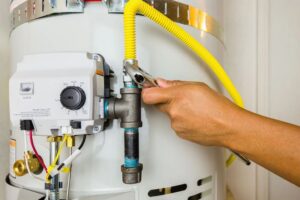
If you’re wondering what size gas hot water system do I need, gas systems – both storage and continuous flow – recover heat faster than standard electric, which means a smaller tank can often meet the same demand.
A 135-160 litre gas storage unit can serve a family of three to four comfortably because it reheats quickly between draws.
Electric
Electric storage systems recover more slowly, which is why they’re sized larger.
What size electric hot water system do I need for a family of four? In this case, you’d typically be looking at a 250-315 litre tank to ensure there’s enough pre-heated water to cover a heavy morning.
Heat Pump
Heat pump systems are sized similarly to electric storage but have their own efficiency consideration – because they extract heat from ambient air, they perform better in warmer climates. Queensland is well suited to heat pump technology, and if you’re asking what size heat pump hot water system do I need, a 200-270 litre unit covers most three to four person households in SEQ comfortably, with lower running costs than a comparable electric system.
Solar
Solar hot water systems introduce the additional variable of collector sizing alongside tank sizing. What size solar hot water system do I need? It depends on:
- Your roof orientation
- Available panel area
- Whether you have a gas or electric booster.
For most Queensland homes, a 300-360 litre tank with two to three collectors covers a family of four well – the abundant sunshine here means the booster rarely needs to carry the load.
5. Available space
This matters more than people assume.
A 315 litre storage tank needs a meaningful footprint – on the ground or on a platform, indoors or out.
But are you:
- In a unit?
- A townhouse with limited external space?
- A home mid-renovation?
Space constraints can then steer you toward a continuous flow system or a heat pump unit, which have different installation footprints.
Let your plumber know upfront if space is a constraint – it can meaningfully change what’s on the table.
6. Running costs VS upfront cost
Did you know the cheapest system to buy is often the most expensive to run?
- A basic electric storage system has the lowest purchase price – but the highest ongoing energy cost.
- A heat pump costs more upfront but can use up to 70% less electricity than a standard electric system.
- Solar has the highest upfront cost but the lowest running cost in a sun-drenched location like the Sunshine Coast or Brisbane.
If you’re planning to stay in your home long-term, the running cost calculation matters. A plumber can give you a rough payback period based on your current tariff and usage, which puts the upfront price in proper context.
7. Off-peak tariff eligibility
Electric storage systems on an off-peak tariff heat overnight at a significantly cheaper rate – but this only works if the tank is large enough to store a full day’s supply.
If you’re planning to run an electric system on off-peak, you generally need to size up slightly to ensure the overnight heating cycle covers your next day’s demand. This is a conversation worth having with your plumber before you commit to a tank size.
8. Queensland climate
This one definitely works in your favour! Our amazing climate makes heat pump systems more efficient than they’d be in cooler southern states – and solar hot water systems here outperform the national average for solar contribution.
If you’re weighing up a heat pump or solar system and you’re based on the Sunshine Coast or in Brisbane, the climate is pushing both options firmly into viable territory – and it should influence your sizing and system type decision accordingly.
Still not sure what you need?
That’s exactly what we’re here for. Static Plumbing’s licensed plumbers work with homeowners all across Brisbane and the Sunshine Coast every day to size and install the right hot water system for:
- Your home
- Your household
- Your budget.
Get in touch with our friendly team for an obligation-free quote.